
October 19, 2026 Lumber News
SYP Southern Pine went down again this week, and has been falling steadily since mid-September. Most #1 and #2 items dro...

Lumber Notes November, 2025
Welcome to another look at the lumber world!
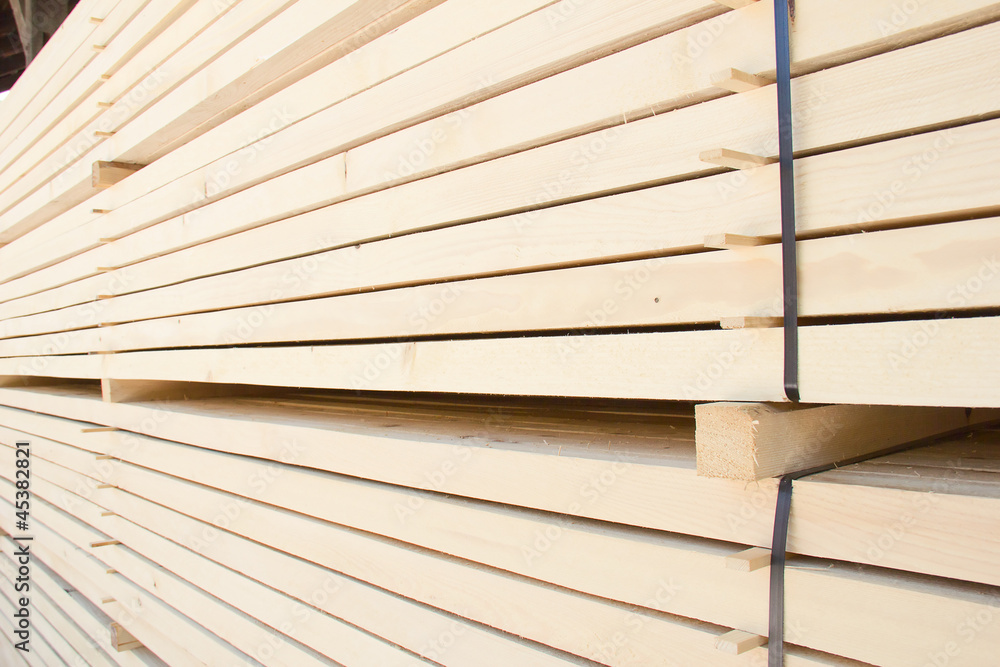
Do you know how much lumber a large sawmill can produce? Here are some facts to help you grasp the numbers. West Fraser, a large sawmill in Western Canada, can produce thirty rail car loads of lumber in one day. How much lumber is that? Well, there is about 100,000 board feet of lumber per rail car, so that would be a staggering 3,000,000 (three million) board feet a day. A lot of that would be in 16’ lengths but there would also be some 8’, 10’, 12’, and 14’ lengths. Each rail car can transport four tractor-trailer loads of lumber. So that would come to 120 semi loads of lumber a day. Imagine a line of tractor-trailers on the interstate, bumper to bumper, that was over a mile and a half long. All in a day’s work!
Some important news in September was that multiple mills in both North America and Canada announced formal production decreases for the remainder of the year. One major mill (Interfor) announced that they will produce 12% less lumber than normal. This is due to persistently weak market conditions along with other factors.
Announcements and actions such as these are very likely to bring a tight supply for the remainder of the year which will inevitably allow lumber prices to rise. We do not expect to see many more weeks of double digit decreases in lumber prices (like we have had through August) for the remainder of 2025.
Another interesting news item is that Canada is running out of the best quality trees that are easily accessible to sawmills and loggers in Western Canada. Due to this logistic difficulty Canada is shifting production further east where thus far this is not as much of a problem, as well as importing more lumber from Europe.
Southern Yellow Pine has been hovering at the bottom for the last several months, which we will see in greater detail as we look at the numbers.
In the first week of September, 2x4s were the leader of the pack as they took the largest decrease (in comparison to other widths in SYP) for three weeks straight; dropping around $10 to $15/mbf (per thousand board feet). All lengths in 2×6 fell $10/mbf. As for 8s, 10s, and 12s, decreases ranged from $0 to $10/mbf depending on the length. The overall average for standard grade SYP was a decrease of $6/mbf this week.
The next week, SYP hardly moved which is likely an indication that prices hit the bottom.
2x4s did fall between $5/mbf and $10/mbf while 2x12s rose around $5/mbf. All other lengths did not change in pricing during this time. Low grade material did not change any this week either so dealers were stocking up on #3 and #4 material.
In the middle of September, yellow pine took on it’s first week of increases in six weeks with no sizes taking any decreases and many increasing around $10-$15/mbf. 2x12s rose another $15/mbf. The supply of 2x12s was tight so it was a good time to buy this particular dimension. All other dimensions and widths were spotty with most not changing at all and those that did increase only increased $5/mbf.
Near the end of September yellow pine took on another increase, but only about $5/mbf on average across all dimensions. 2x12s were again by themselves since they were the only dimension increasing but still only increased by $10/mbf on all lengths. 2x4s and 2x6s saw a $5/mbf increase while 2x8s and 2x10s did not move. Low grade did not change price.
As pricing trends in yellow pine have been relatively predictable from week to week over the past months, many buyers were confidently stocking up through September as it had clearly reached the bottom. With this being the case, many of these buyers that have stocked up will most likely not have room to keep buying in the months to come which will probably lead to a lag in demand for the coming month or months, and in turn, a very slow taper up in prices. If we take a step back to look at the bigger picture, we might notice that on average, the same truck of SYP today would cost you $2700 less than it would have several months ago.
Spruce Pine Fir, like yellow pine, has been dropping. Here are the numbers.
By the beginning of September, SPF had seen three straight weeks of near or even above $20/mbf ($20 per thousand board feet) decreases. 2x4s had fallen around $20/mbf. 2x6s came down $15/mbf. Studs fell around $20/mbf. As far as SPF goes, we felt that the stud (or precut dimensions) were the best deals over this time. It was a great time to stock up on any SPF products and studs as mills were anxious to move material.
A little while later, 2x4s fell around $12/mbf and 2x6s fell around $8/mbf. Studs again fell another $15/mbf.
As we moved further into September the SPF free fall continued but slowed down. Studs came down another $10/mbf while 2x4s and 2x6s came down around $10/mbf. There are still many political factors at play in the lumber world; especially regarding lumber coming out of Canada. As we mentioned earlier in this article, multiple mills in Canada formally announced production decreases for the rest of the year; and even more mills opted to do the same after the initial wave of decreases. This production curtailment tightened supply within the next month at least.
The Canadian Prime Minister announced a $1.2 billion total package of loan and grants for the Canadian lumber industry in efforts to combat the recent changes in American duties that naturally decreased demand earlier this summer. With all this at play it was certainly hard to determine just when and how much of SPF to stock up on. It was a great time to buy SPF; but not going overboard in stocking up while prices were low was probably the safest route.
Nearing the end of September we saw SPF continue to fall; but less with each week as studs and dimensional came down another $5/mbf. We considered SPF pricing to be in the valley since prices were not likely to get much lower, and we anticipated that SPF prices would not skyrocket overnight.
And just like SYP, SPF will also most likely slowly increase through fall.
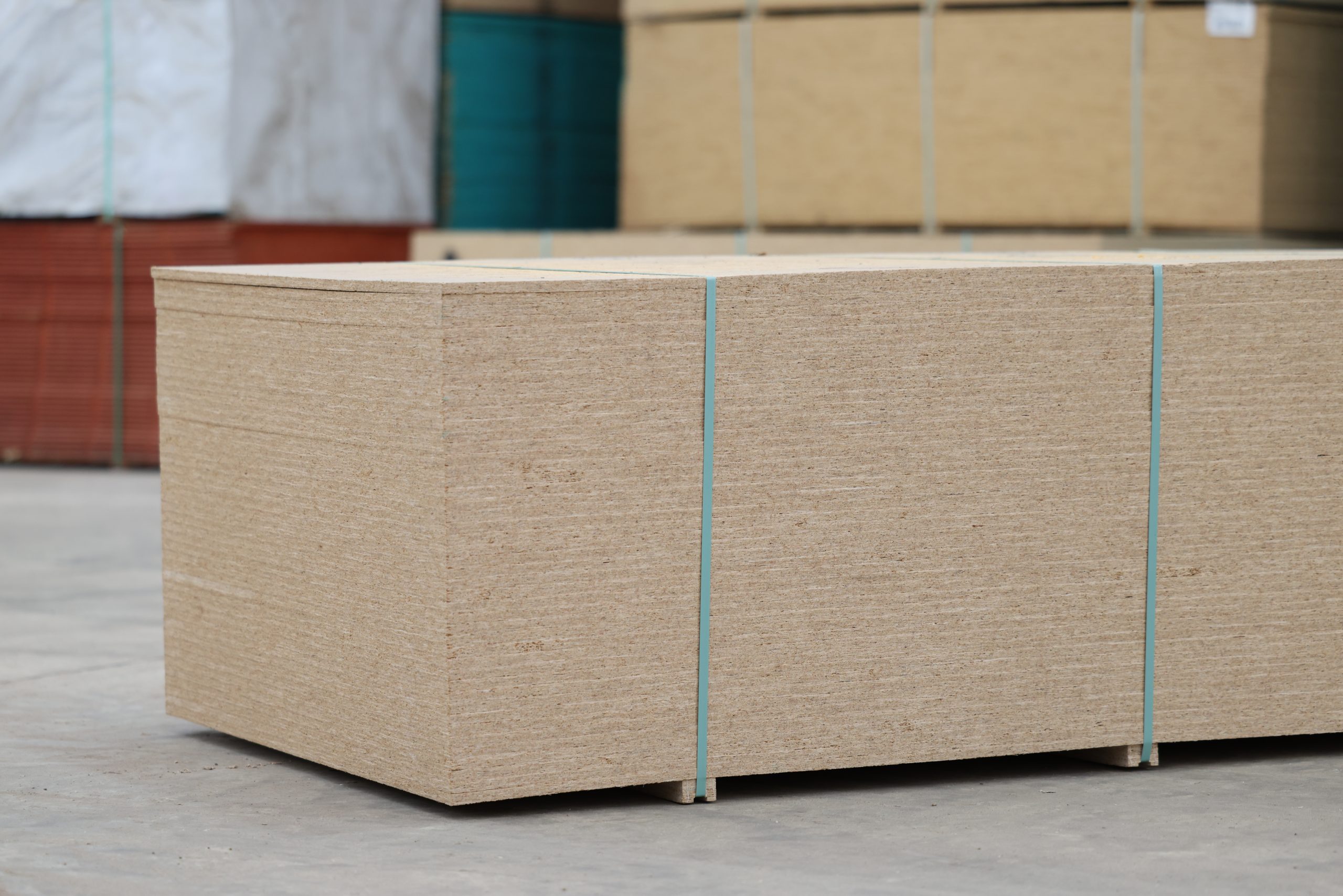
OSB is still hovering at the bottom with no signs of increasing. It was unusually quiet all summer as prices hardly fluctuated at all. Mills have been quick to take offers especially when buying multiple truckloads at a time. 7/16” hovered around $7.36 to $7.58 per sheet near the end of summer.
As of the middle of September the lumber market was in a special spot with all three major lumber categories (SYP, SPF, and OSB) seemingly at their bottom dollar prices, and many buyers were heavily stocking up as much as they could. So as much as the mills may want to begin increasing pricing as we come into fall; a lack of demand may not lend to prices rising quickly as many buyers will be working through their overstock in the months to come.
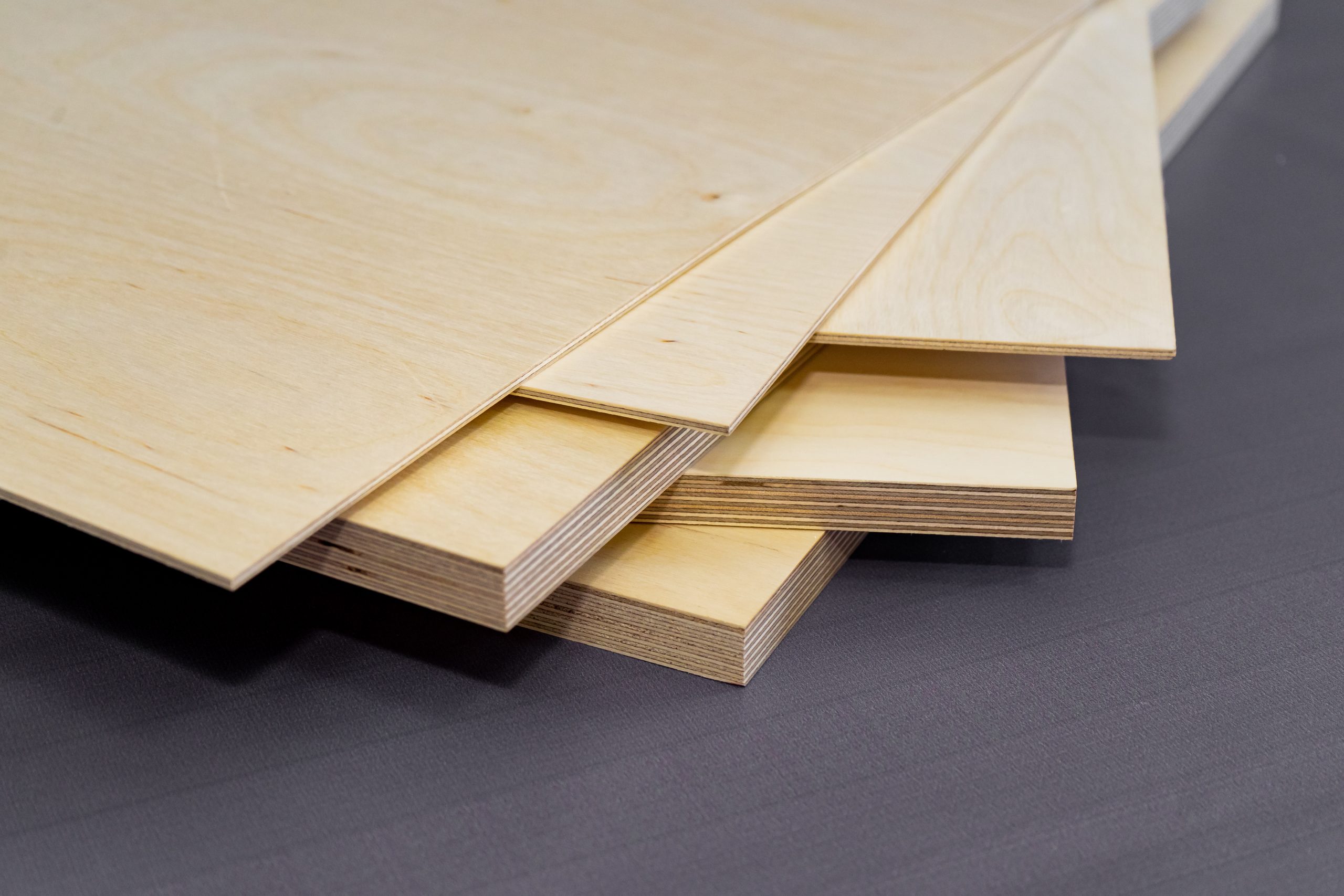
½” plywood (4-ply) remained flat near the end of summer, trading on average at $15.36 per sheet.
Demand for pallets has been slow to average through the month of September, and some were hoping for an uptick as the holidays approached. “Overall business is challenging”, as one pallet manufacturer stated. “High input costs, trade uncertainty, and low pine lumber prices all combine to make profitability very difficult”. In the middle of September western lumber suppliers started to report a significant uptick in demand, which caused strain on available supply of Canadian lumber due to less production across Canadian mills. Pallet pricing had remained mostly steady through September, as we can see from the fact that the average hardwood cant composite price hardly strayed from its $569/mbf average, which was $6/mbf higher that the month prior. Softwood remains plentiful although hardwood has been more difficult to come by.
Demand remains steady, although not strong. 7×9 cross ties traded for an average of $38.63 per tie through August.
Prices have been gaining ground for US hardwood but that isn’t due to more demand, rather it is due to low supplies. So far through the summer of this year the production of eastern US hardwoods is down 3 bbf (billion board feet) from three years ago.
We are truly in an age of global markets. Much of the hardwood in the US is shipped to other countries like Canada, China, Vietnam, the Middle East and North Africa. Exports of US hardwood to some of these countries is increasing while exports to other countries is decreasing. For example, hardwood shipped to the Middle East, North Africa, and Vietnam have climbed while exports to Canada (in March) were the lowest on record.
The US and China agreed to extend the pause on heightened tariff rates into early November. China is the largest manufacturing country in the world, but its manufacturing of wood products is shrinking, reducing Chinese demand for hardwoods such as Walnut, Ash, Poplar, Cherry, and Red Oak. Walnut log exports to China reached a record of over 89 MMBF (million board feet) in 2024, and remained strong in January and February of 2025, but then fell back in March as China’s log ban went into effect. That was 21% of total US hardwood logs shipped that year. Walnut then saw the most significant drop in demand in April through June, dropping by over eight million board feet.
Hardwood demand in the US remains lackluster, especially in the furniture and cabinet industries. Residential flooring, moulding, board road (crane mats), pallets, and railroad ties are steady but couldn’t be described as strong. White Oak commands the highest price, averaging $4,150/mbf which is $4.15 per board foot in August. Walnut came in a close second, averaging $3,110/mbf which is $3.11 per board foot. Soft Maple gets third place, trading at $2,769/mbf which is $2.77 per board foot average.
New house sales jumped by 20.5% in August over the month of July on a seasonally adjusted basis. This came as a surprise to economists who were predicting it to drop further from July’s rate. US manufacturing activity expanded in September for a fourth straight month, even as growth slowed from recent highs, with business confidence improving and price pressures cooling, according to an S&P Global report. The DoL (Department of Labor) released new data on September 11 showing that the number of Americans newly filing applications for unemployment benefits climbed to the highest level in four years. The Federal Reserve cut interest rates for the first time this year (in the middle of September) in response to weakening labor market conditions.
Our team at Lumber Link collaborated to share Lumber Notes with you. We enjoy providing mill direct savings to volume lumber users. You can reach us at 606-547-4455 or [email protected]