
October 19, 2026 Lumber News
SYP Southern Pine went down again this week, and has been falling steadily since mid-September. Most #1 and #2 items dro...

Welcome to another look at the lumber world!
There is a common misconception afloat that our forests are facing the threat of deforestation. Data shows that the exact opposite is actually the case. According to Appalachian Hardwood Manufacturers, Inc., the Appalachian (hardwood) forest has increased it’s growth to removals by more than 15%. Another way of stating this is to say that 2.82 trees are growing for every tree that is either harvested or dying. Having worked in tree trimming and removal and growing up in the woods this makes sense. Trees are literally growing faster than we are removing them!
I’d also like to remind our readers of the purpose of these “lumber notes” as we call them. We give weekly reports of the lumber market (“Lumber News”) on a recorded phone line and on our website. The phone number is (585) 577-2187 and the ID # is 62807. The purpose of Lumber Notes, however, is to step back to get the big picture. We look at larger trends and data and review the month or months behind us.
Some of you may not be familiar with the word “volatile”, but one of the meanings in my dictionary is “changeable”. “Volatile” well describes the market this past summer, from record rainfall in parts of the Eastern US making logging difficult, to widely diverse AD/CVD rates (anti-dumping and countervailing duties) applied to many countries. Traders and buyers are having a difficult time looking into the future to make wise decisions. This is a challenging time to be in the lumber industry! The AD/CVD did not shake up the industry as greatly as some thought they would, and as evidence of this (and also maybe because of it), lumber buyers have been buying steadily in spite of the AD/CVD.
Join us as we explore this industry in greater detail.
The beginning of August saw no major changes whatsoever with nearly all sizes at a stand still in price. We predicted that this would change as SYP prices try to follow suit with the spike in the SPF market. Great deals on low grade material were easy to come by, especially when buying multiple trucks as mills were anxious to move material quickly. We were suggesting to stock up, especially if you use low grade material. In the middle of August all traders in SYP were anxiously waiting for prices to spike from the impact of Canadian lumber sharply increasing two weeks before (from new AD/CVD rates), but that did not happen. In fact, it did the opposite as SYP fell around $8/mbf ($8 per thousand board feet) instead. Almost all dimensions fell between $5 to $10/mbf during this time.
Here are some snapshots from the first week of July to the middle of August:
2x4s came back to where they had been. 2X6s and 2x8s increased $15/mbf, 2x10s and 2x12s didn’t really take on an increase, but provided good deals compared to the rest of the dimensions. We suggested buying those then.
With a week of decreases in SYP in the middle of August (to everyone’s surprise), we said that mills will likely be very ready to move inventory quickly and sell at great prices. Grade #3 material did take on a $5/mbf increase, which was the first increase in low grade material in many months. Later in August SYP took another week of double digit decreases. Most dimensions were taking on increases during all of July. 2X10s and 2x12s, however, only saw $5 to $10/mbf increases during that time which put those two dimensions at the top of our “buy now” list. 2X4s took the largest decrease that week, falling $20/mbf. 2X6s, 2x8s, and 2x10s all fell around $10-$15/mbf. Low grade material stayed nearly unchanged.
At the end of August we had another week of double digit decreases. 2X4s again took the largest decrease, falling $20/mbf while 2x6s also fell $20/mbf. 2X8s and 2x10s all fell around $10-$15/mbf. 2X12s only fell around $10/mbf on average.
Here’s a quick zoom out of SYP this summer:
SYP standard grade fell around $100/mbf through May and June. It then increased $15/mbf through July but quickly started decreasing again in August, falling $35/mbf through the month. So from May through August, standard grade SYP has fallen nearly $120/mbf. Grade #2 came down around $10/mbf over the summer, and #3 and #4 came down $40-$50/mbf over the summer.
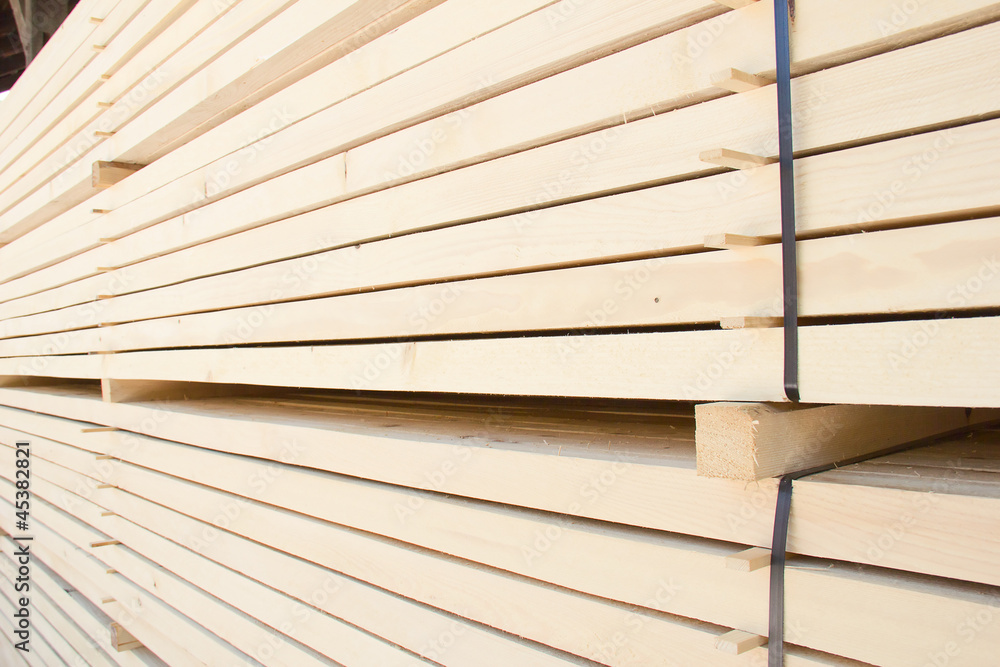
At the beginning of August the long-anticipated anti-dumping duty (AD) rates were officially decided on and imposed on Canadian softwood lumber. The rate, which had been at 14%, went up to 27%. This rate increased SPF prices around $30/mbf overnight, which is equivalent to around $800 more a truckload. Print prices reached their peak at this time also. A short time later both 2x4s and 2x6s increased $10/mbf on all lengths. We noticed that mills and traders were much quicker to provide quotes at this point than they had been in the previous weeks since they no longer needed to tip-toe around the previously unknown price increases. We expect SPF to continue rising slowly in the coming months with steady demand especially with nicer fall weather approaching. The gap between SYP and SPF in early August (when comparing apples to apples in dimensions) was quite substantial. A 2x4x16 in SPF was around $8.27 a board and in SYP it was $4.70. We saw 2×4 studs increase another $20/mbf which brought the total increase to $50/mbf in two weeks. That is a little over $0.25 a board higher in just two weeks.
Moving forward now to the middle of August, it seemed that the new tariff on Canadian lumber only caused buyers to sit on the sidelines. Since those increases, prices rose $30/mbf the first week, then $10/mbf the following week, and then fell $2/mbf the week after that. The tariff really came at an odd time for the lumber market. At the peak of building season, many traders were expecting demand to remain steady (with a likely increase), but that didn’t happen. It was hard to predict where the market would go so we were suggesting to buy only what you needed so as to not under or over stock yourself.
Later in August 2x4s took a $20/mbf decrease with 2x4x16s taking a $30/mbf decrease. 2X6s came down $15/mbf during this time, and precut studs took a large decrease, 2x4s falling $35/mbf and 2x6s falling $15/mbf. It was apparent that mills were anxious to move material with the double digit cuts like this, but there was optimism about the market picking up after Labor Day. The last week of August saw the largest one-week decreases in SPF across nearly all dimensions. This was especially true for studs as they decreased nearly $35/mbf on average. 2X4s fell around $25/mbf. 2X6s came down $20/mbf.
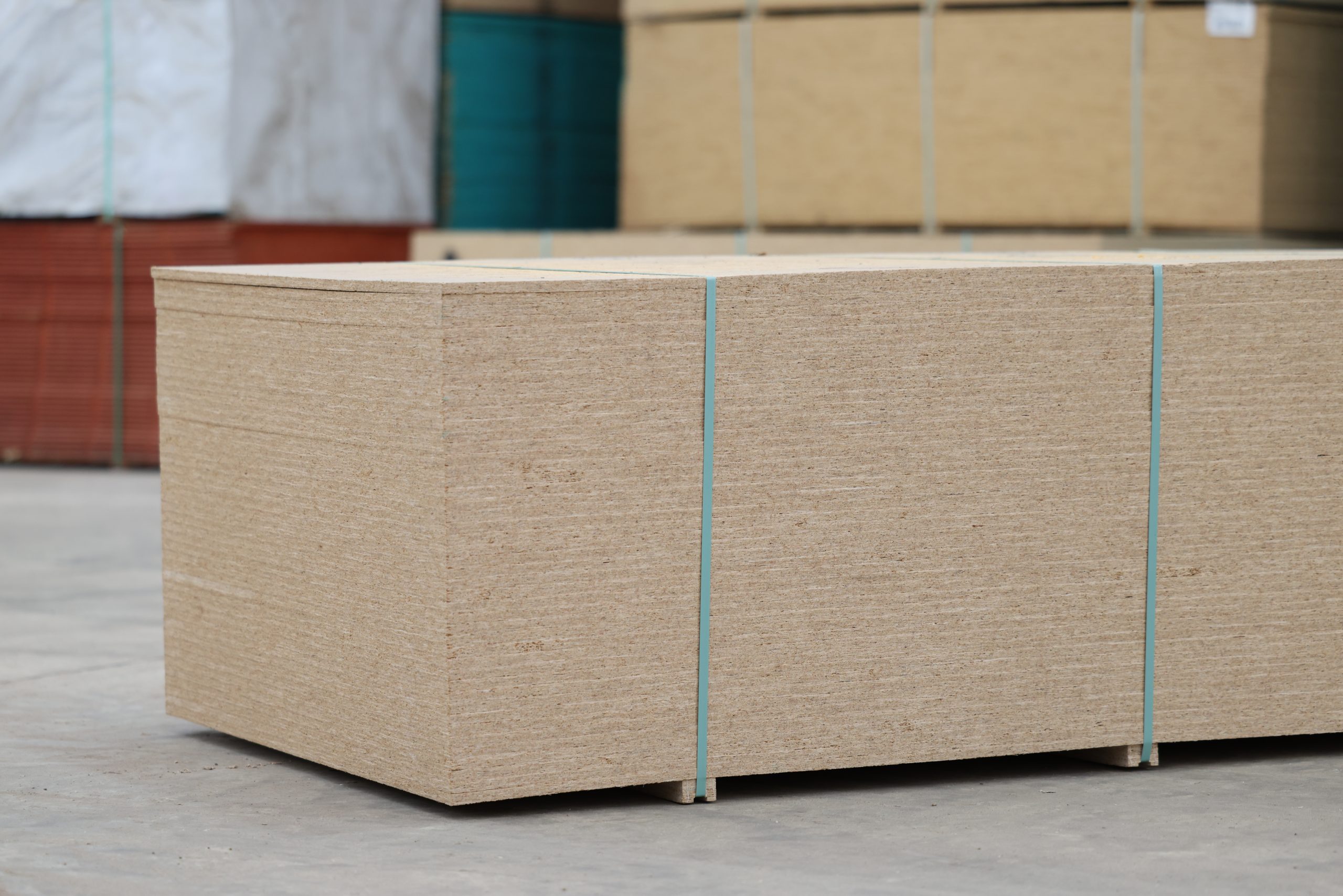
The average price of OSB (all figures on a 7/16-inch basis) in August was $6.62 a sheet, which is down $1.60 from July and down $3.32 a sheet from the average price in August over the last five years. Prices as low as $5.44-$5.76 a sheet were reported in the Southwest.
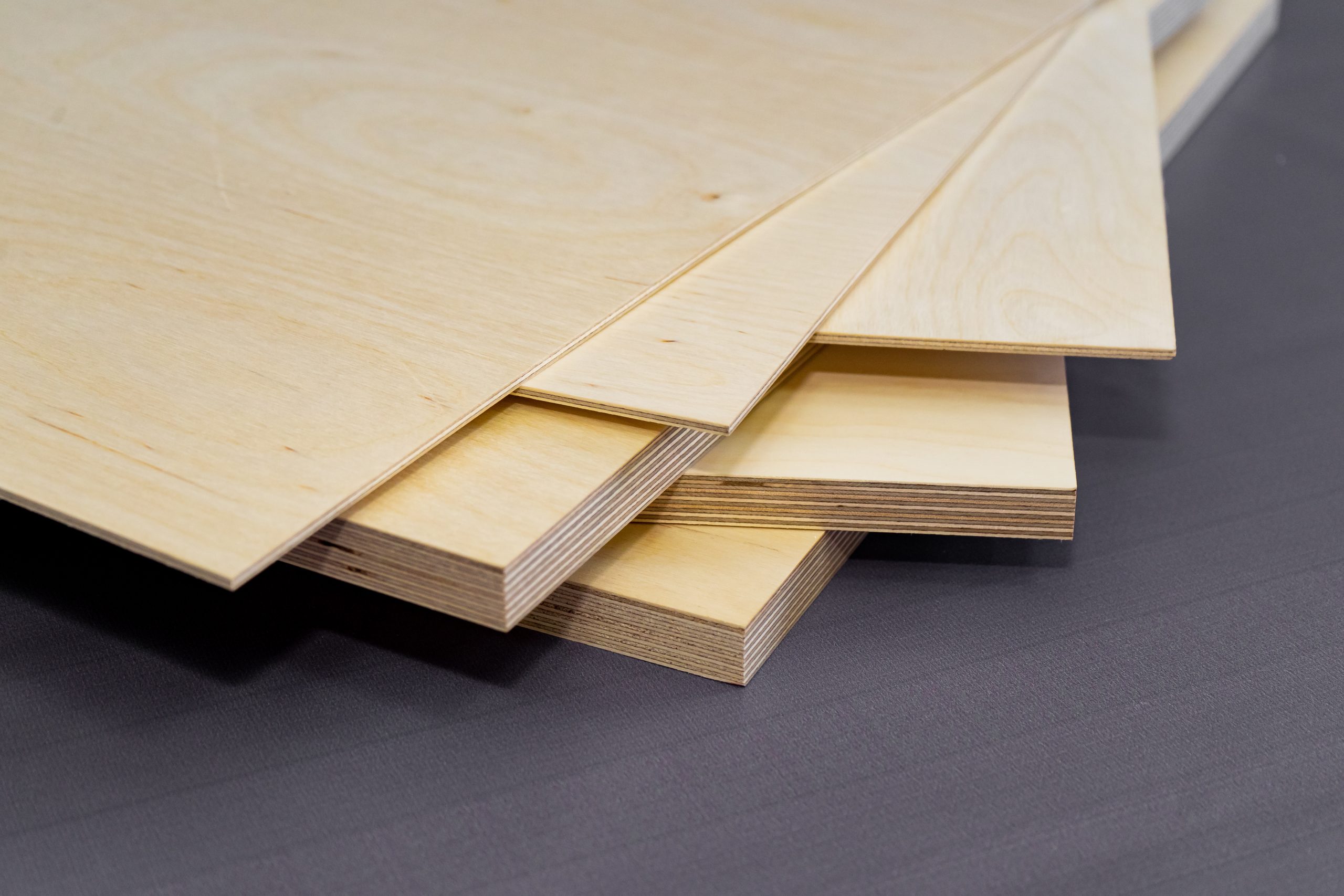
Brazil is the largest exporter of plywood to the US. According to the US Foreign Agricultural Service, Brazil shipped nearly 887 million square feet of plywood to the US last year (3/8-inch basis). Brazil is also the fourth largest exporter of lumber, shipping over 184 million board feet into the US. In dollar value that is $1.6 billion worth of wood products to the US in 2024, which is 50% of Brazil’s total production. Mills in Brazil were hit hard by the AD/CVD, which could end up limiting the volume of lumber and panel products entering the US from that country. At the beginning of August some mid-week numbers showed a drop of around $5 a sheet but for the most part we were seeing pricing as it had been the past month or more.
June and July were slow months for pallet shops. Some pallet shops in the Midwest were busier in August. The average hardwood cant price in August was $563/mbf. Comparing that with last year’s average of $550/mbf we see that the price averages $13/mbf more than in August of last year. I read an interesting article about several logistical trends which may impact the pallet industry in the future, including a rise in automation and smart racking systems which may result in decreased pallet demand as warehouses and storage facilities streamline and upgrade their systems with cartons and bins rather than pallets. Yet with increased automation and mechanization using robotic pickers and other innovations, the need for greater density (more material in increasingly smaller spaces) will increase, which may increase the need for pallets.
The DOC (Department of Commerce) announced that the new CVD (countervailing duty) rate on Canadian lumber was doubling from 6.74% to 14.63% which went into effect on Tuesday August 12. That meant that the AD/CVD (anti-dumping and countervailing duties) rate jumped from 14.5% to 35%. The pallet shops that were doing the best were those that were producing custom pallets for specialized customers.
One bright spot is that Brambles Ltd, the parent company of the large pallet company CHEP, experienced a 3% sales revenue gain and profit bump of 10% near the end of August as the end of its fiscal year results came in. That is impressive given the lackluster demand in the pallet industry and an unstable global economy.
Railroad tie insertions increased seasonally in August since maintenance crews replace more ties in the summer months. Buyers shifted from inventory buildup to buying for replacement needs only. Prices for 7×9 crossties remained steady through August. Demand in August remained in the fair/steady range, and as we mentioned last month, treaters were sitting on plenty of inventory, so tie purchases by treating operations remained at replacement levels.
Hardwood sawmills are experiencing historically low production. One problem is that the hardwood industry is losing out to non-wood lookalikes. If it could convince consumers with a sustained promotion program of the value of real hardwood it could better fight off competing products. Hardwood lumber usage is spiraling downward in many categories, including cabinets, moulding/trimwork, flooring, and furniture. In the last seven years alone total hardwood consumption has fallen by 2.7 bbf (billion board feet).
Sourcing logs has been challenging this year as unusually wet weather conditions have hindered logging operations across most of the Eastern US. Needless to say, the sawmill industry has not been in a healthy position. Some have estimated that it costs 20%-40% more to run a log through a sawmill than it did in 2020. Uncertainty has been quite harmful to the industry as producers scratch their heads over what to buy and what to pay for logs.
The pallet industry used to consume approximately 80% hardwood raw materials and 20% softwood. Now those numbers have reversed, severely impacting the hardwood market.
The average 30-year fixed rate mortgage fell to 6.63% for the week ending August 7 which was the lowest level since April. In June of 2020, private expenditures on US residential construction in the repair and remodeling sector totaled about $228,000,000,000 ($228 billion). Five years later, in June of 2025 the figure was $353,000,000,000 or $353 billion, which means repair and remodeling has risen about $25 billion per year since 2020.
Private expenditures on US residential construction for single family homes (new construction) have also risen. In June of 2020 total expenditures were about $270 billion and in June of this year they were nearly $414 billion, meaning a climb of $28.8 billion per year. The repair/remodel sector is not far behind new home construction in terms of how much money was spent, making it a strong market.
Once again, we look at the overall economy in this section and not just housing. Pickup truck sales were up 0.3% in July over June, which means that folks were a little more free with their spending. Economic growth data for the 2nd quarter of 2025 was revised since the numbers were higher than previously thought in three significant ways: 1) consumer spending was up in the 2nd quarter, 2) underlying corporate profits were up, 3) the GDP (gross domestic product which is the total value of everything being produced and sold) rose by 3.3% compared to the first quarter.
Our team at Lumber Link collaborated to share Lumber Notes with you. We enjoy providing mill direct savings to volume lumber users. You can reach us at 606-547-4455 or [email protected]